

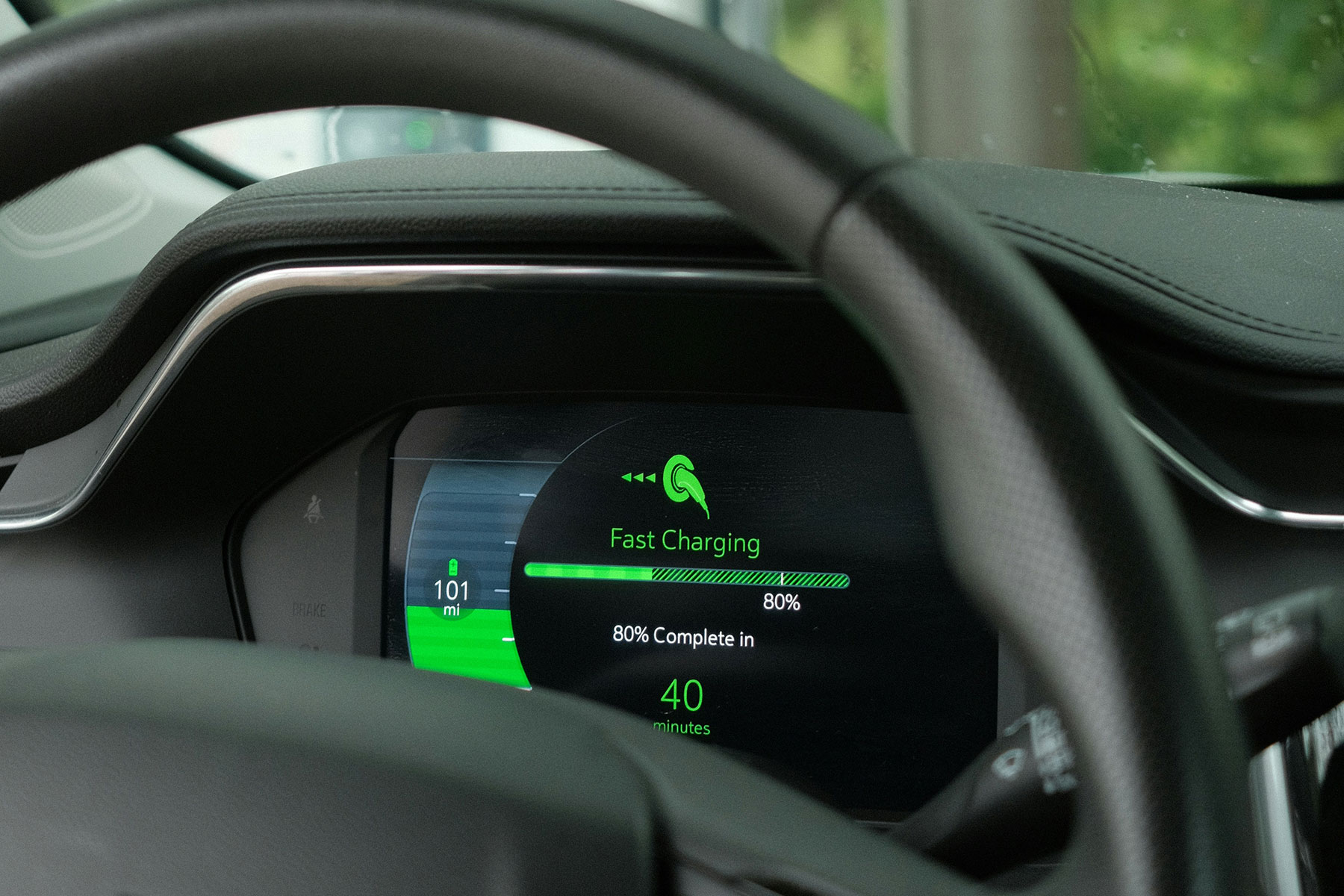



When installing a Level 2 charger, the method of connection directly affects charging speed. A hardwired charger can typically charge at up to 48 amps, while a plug-in style charger connected to an outlet is generally limited to 40 amps.
Hardwired chargers are often less expensive to install than adding an outlet because outlets located in garages or outdoors must be GFI protected. A hardwired charger does not require additional GFI protection, as GFI protection is built directly into the charger itself.
When charging at 240 volts, the vehicle is only permitted to draw 80 percent of the circuit breaker rating due to a code requirement known as continuous load. For example, if a 50 amp breaker supplies power to a 50 amp EV outlet, the vehicle is only allowed to charge at 40 amps. Continuous load applies when equipment has the capability of running for three hours or more. This rule exists because long periods of full power draw create heat, and excessive heat can cause breakers to malfunction over time.


